Introduction
Istanbul, the time-honored city that merges past and present, is considered one of the world’s most famous cities. It is known as the only city that spans two continents, Europe and Asia, and is a major cultural and commercial center. In this article, we will cover the many aspects of this enchanting city that combines ancient heritage with modern urban development.
Unique Geographical Location
Istanbul is located in northwest Turkey and spans across the Bosphorus Strait, which connects the Black Sea and the Sea of Marmara. This geographic position gives the city a distinctive character as a bridge between East and West. The Bosphorus is one of the world’s most important waterways, enhancing Istanbul’s economic and commercial significance.
Istanbul’s Rich History
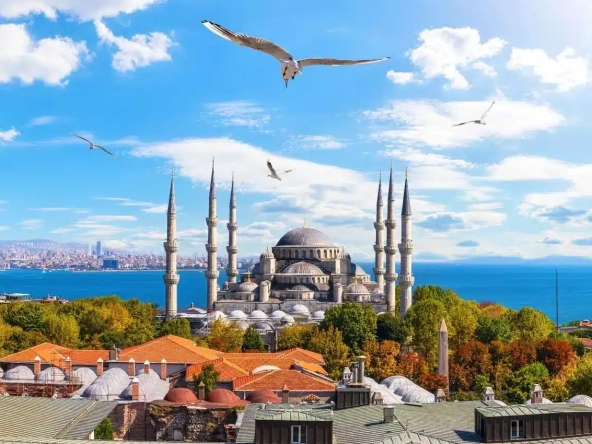
Istanbul’s history stretches back more than 2,500 years; it was once known as Byzantium before it became Constantinople during the Roman era. Later, it served as the capital of the Byzantine Empire, and then of the Ottoman Empire. This deep historical legacy endowed Istanbul with many famous landmarks such as Hagia Sophia, Topkapı Palace, and Blue Mosque.
Cultural Diversity and Population
Istanbul is considered a symbol of cultural diversity, home to over 15 million people from various cultural and ethnic backgrounds. Visitors can notice this diversity in different neighborhoods such as Beyoğlu, Fatih, and Kadıköy, where Eastern and Western influences blend in a unique way.
Major Tourist Attractions
Some of the most prominent tourist landmarks in Istanbul include:
- Hagia Sophia: a landmark reflecting the city’s transformation from church to mosque, then museum, and now once again a mosque.
- Topkapı Palace: the seat of Ottoman sultans, displaying impressive historical artifacts.
- Blue Mosque: an architectural masterpiece characterized by its design and grandeur.
- Grand Bazaar: a traditional market considered among the oldest and largest covered bazaars in the world.
Urban Development and Infrastructure
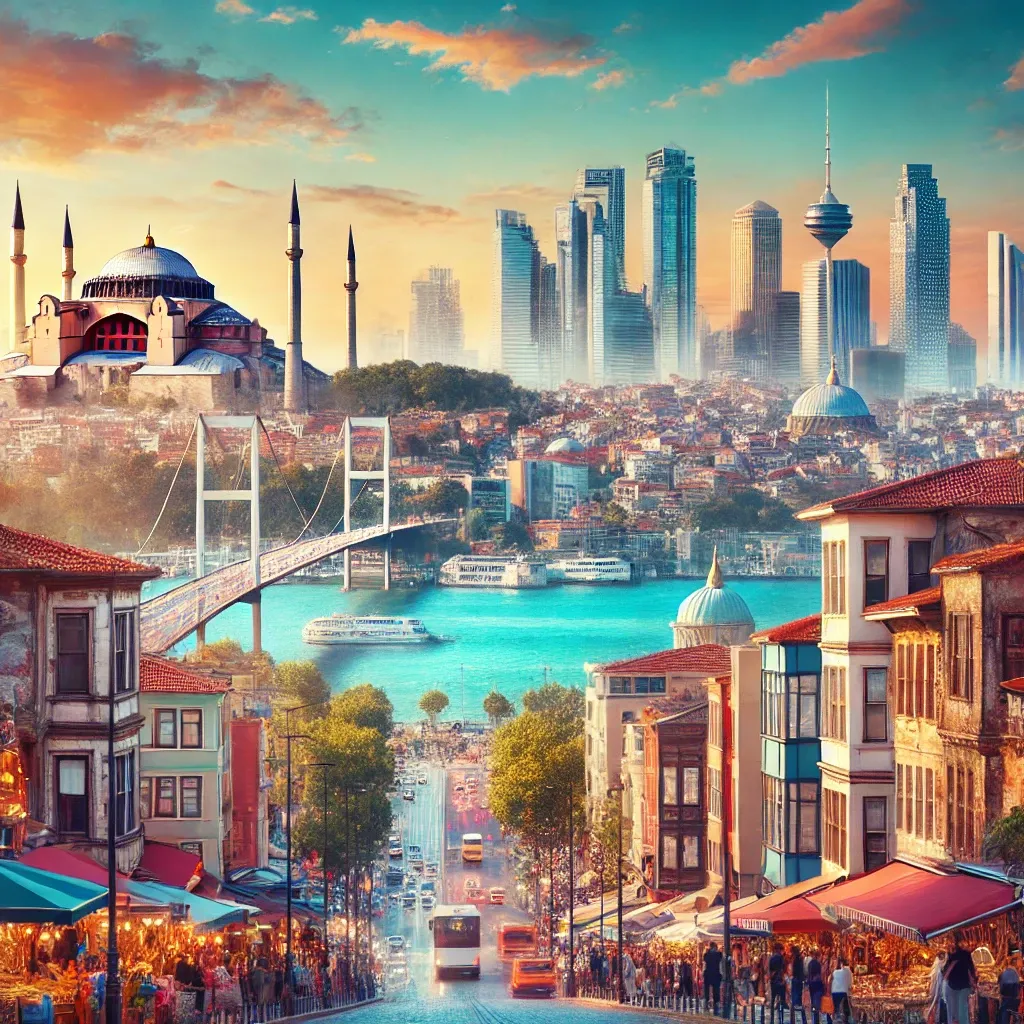
Despite its ancient history, Istanbul is continuously evolving. The city is witnessing an urban boom reflected in residential tower complexes, modern shopping centers, and advanced transportation infrastructure, including subways and metrobus lines. Districts such as Başakşehir and Maslak illustrate this modern development.
Istanbul as an Economic Center
Istanbul is not just a cultural hub; it is also the economic heart of Turkey. The city hosts many large companies, banks, and financial institutions, and serves as a center for international trade thanks to its strategic geographic location.
Tourism in Istanbul
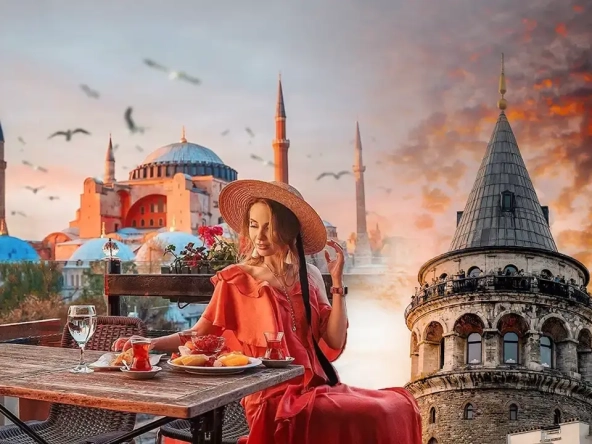
Tourism remains one of the most important sectors in Istanbul. Every year, millions of tourists visit the city to enjoy its natural beauty and historic landmarks. Istanbul is also a preferred destination for those wanting to experience authentic Turkish cuisine such as kebab, meat-filled pastries (lahmacun/pide), and baklava.
Education and Culture
Istanbul houses many prestigious universities, such as Istanbul Technical University and Boğaziçi University, making it an important educational center. Additionally, many cultural and artistic festivals are held in the city, including the Istanbul Film Festival.
Conclusion
Istanbul is a city that combines heritage and modernity, East and West. It is not just a tourist destination but a full life experience. Whether you are looking for a travel adventure, an investment opportunity, or a place to live, Istanbul offers all that and more.